Black Watercolor Grunge Backgrounds: A Designer's Secret Weapon
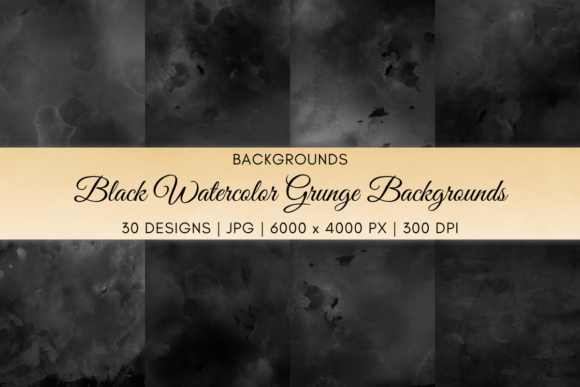
There's a moment in every creative project where you hit a wall. The layout is clean, the fonts are perfect, but the whole thing feels... flat. It lacks a certain je ne sais quoi, a layer of depth that separates good design from truly captivating work. This is where a tool like the Black Watercolor Grunge Backgrounds bundle enters the scene, not as a flashy headline act, but as the foundational element that gives your entire composition its voice and atmosphere.
Forget sterile digital gradients or overused stock textures. We're talking about something with genuine character. Imagine the organic bleed of ink on high-quality paper, the subtle, gritty texture of pigment settling into fiber, and the unpredictable, beautiful accidents that happen when water and color meet. These backgrounds are the digital equivalent of that experience. They carry a moody elegance, a sense of depth that is both dramatic and sophisticated. The personality is inherently artistic and a little rebellious—it’s grunge, but refined. It’s dark, but not depressing. It’s the visual equivalent of a perfectly worn leather journal or a piece of charcoal art on a gallery wall.
Where This Texture Truly Shines
The applications for a high-impact, textured background are far broader than you might initially think. Its strength lies in its ability to add instant gravitas and emotional weight to a design without overwhelming the content placed on top of it. Think of it as a premium font for your canvas—it sets the entire mood.
For brand identity, especially for businesses aiming for a luxe, artisanal, or contemporary edge, these backgrounds are gold. A photographer specializing in moody portraits, a boutique coffee roaster, or a high-end spirits brand could build a stunning visual language around these textures. Use them as the base for your logo design presentations, on business cards, or as the hero background on a website. They communicate quality and a curated aesthetic instantly.
In the realm of editorial design and publishing, they are invaluable. Imagine a book cover for a mystery novel, a magazine feature on modern architecture, or a podcast thumbnail that needs to stand out in a crowded feed. The dark, inky washes create a perfect stage for lighter, contrasting typography—a crisp sans serif font or an elegant serif font pops beautifully against this kind of textured backdrop. It guides the reader's eye and establishes a powerful visual hierarchy.
For digital creators and marketers, the bundle solves a common problem: creating scroll-stopping social media graphics. A plain color post gets lost, but a post built on one of these black watercolor grunge backgrounds has inherent depth. It makes product mockups look more professional, quote graphics feel more profound, and promotional announcements more substantial. The same principle applies to web design—using a subtle, dark texture in a hero section or as a background for a pricing table can dramatically improve the perceived value of your offering.
Practical Guidance for Integrating Dark Textures
Adopting a strong design element like this requires a thoughtful approach. It's not just about slapping it behind your text. The goal is to enhance, not distract.
First, consider your project's core message. Does a moody, artistic, or luxurious tone align with your goals? If you're designing for a children's party planner, this might not be the right fit. But if you're creating a menu for a cocktail bar or an invitation to a gallery opening, it's perfect. Evaluate the fit by holding the texture up against your primary content—if the text remains legible and the overall feeling matches your intent, you're on the right track.
Next, master the art of contrast. The key to readability is a strong value difference between your background and your foreground elements. Light-colored text (white, cream, light grey) will always work best. You can also place semi-transparent shapes or cards over the texture to create a cleaner area for longer blocks of copy. This technique is essential for packaging design where regulatory information must be crystal clear.
Font pairing is where the magic happens. The organic nature of the background pairs wonderfully with clean, geometric typefaces. A bold, modern display font for headlines and a simple, highly legible sans serif font for body text is a fail-safe combination. For a more eclectic, artistic feel, you could experiment with a handwritten font or a script font, but use these sparingly for maximum impact—perhaps just for a single logo mark or a pull quote.
Finally, understand the asset itself. This bundle provides 30 variations at a high resolution (6000x4000 pixels) and 300 DPI, making it suitable for both large-format print and detailed digital work. The JPG format ensures compatibility with virtually any design software. Having 30 options is a significant advantage; it allows you to maintain a consistent aesthetic across a large campaign—using different but thematically linked textures for a website, social series, and printed flyers—reinforcing brand recognition and professionalism.
Ultimately, tools like these black watercolor grunge backgrounds are about expanding your creative vocabulary. They provide a shortcut to adding the kind of nuanced, tactile quality that usually requires advanced skills or expensive physical materials. By thoughtfully integrating them, you can elevate the emotional resonance of your work, create a more engaging viewer experience, and build a distinct, memorable visual brand that stands apart in a saturated digital landscape.